Case study · Durham · Aug 2025
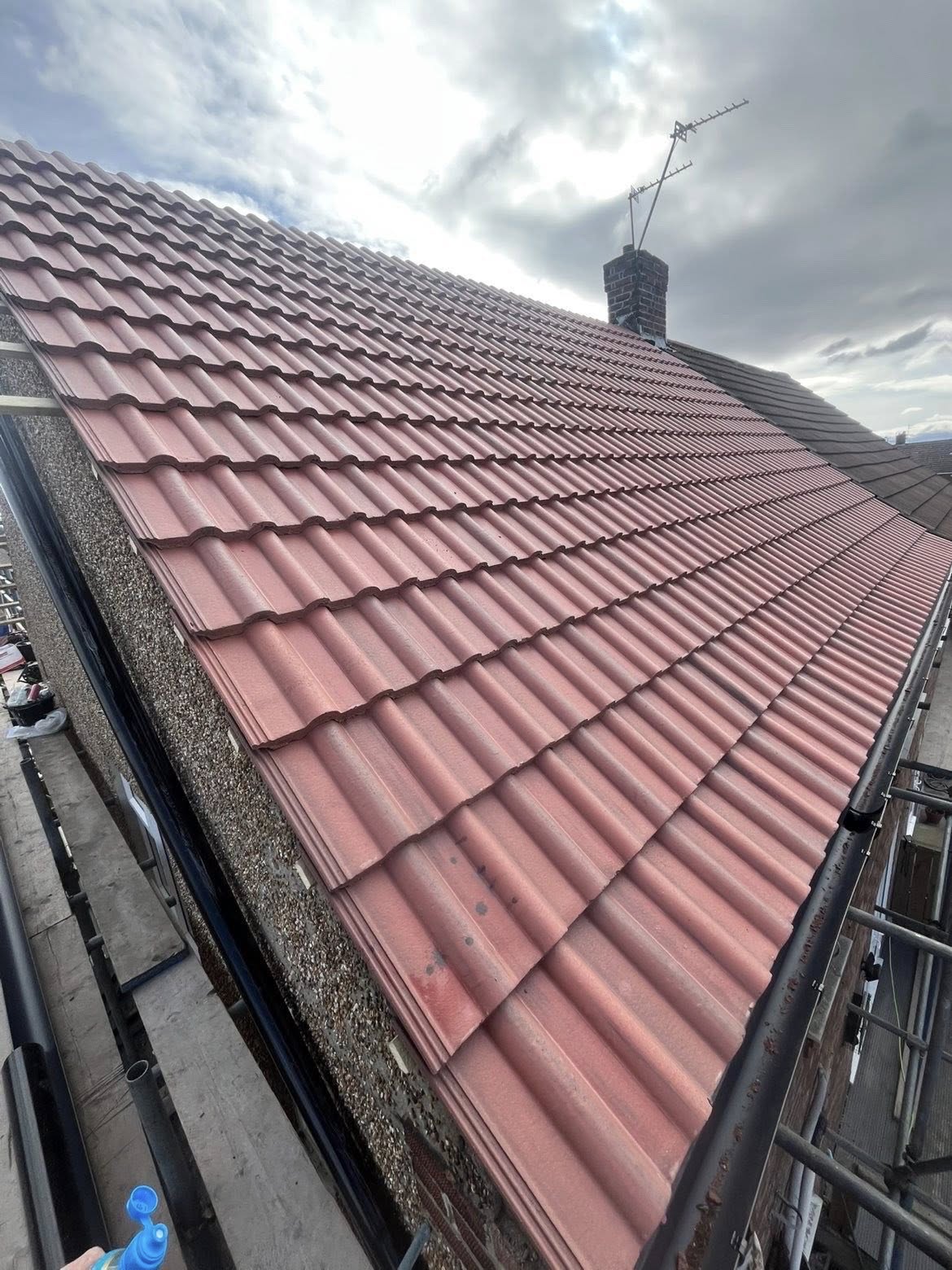
Terracotta hip re-roof in a Durham conservation area
Terracotta clay tile · 7 working days
The situation
A 1930s detached in Neville's Cross, Durham - conservation area, terracotta clay tile original. Owner wanted to match the existing roof exactly. Most of the tiles were still serviceable but the bonding cement on the hips and ridges had failed, and a recent leak had revealed soft timbers at one corner.
The problem
Conservation-area rules meant we had to match like-for-like: no concrete substitute, same tile profile, same colour range. Original tiles were a 1930s Marley Ludlow which is no longer made. We sourced the closest modern equivalent and salvaged enough original tiles from the hips to keep the front elevation looking 100% authentic.
Our approach
Partial strip - front elevation reused salvaged tiles, rear elevation used modern replacement. New breathable membrane throughout. Both hip details dressed in code-4 lead rather than the original cement bed - this is a permitted upgrade in conservation and means the hips won't need touching again for 30+ years.
Spec
- Front: salvaged original 1930s Marley Ludlow (reused, ~60% yield)
- Rear: Sandtoft Humber 20/20 terracotta (closest current match)
- Klober Permo Air breathable membrane
- Code-4 hip & ridge leadwork (LSA-spec)
- All timbers inspected; 2m of wall plate replaced on south corner
- Liaison with Durham County Council conservation officer throughout
The outcome
Seven days - longer than a standard hip re-roof because of the salvage work and the conservation-officer inspection part-way through. Conservation officer passed it without alterations. Front elevation looks untouched; the house keeps its character.
"We were dreading this job because of the conservation rules. They walked us through every decision and handled the council directly. Finished roof looks exactly like it did before - but fixed."
- Helen P., Neville's Cross, Durham
Ready when you are